Methodology
How we decide whether a site is down
Every status page combines two sources: problem reports from people using the service, and, for websites, our own automated checks. This page explains how both work and where their limits are.
Last updated
The three statuses
A status page always shows one of three labels, with the numbers behind it next to it:
- No problemsReports are within the usual range for this time of day, and our check of the website (if there is one) passes.
- Possible problemsAt least 4 reports in the last hour and more than the top of the usual range. Something may be wrong; we are watching.
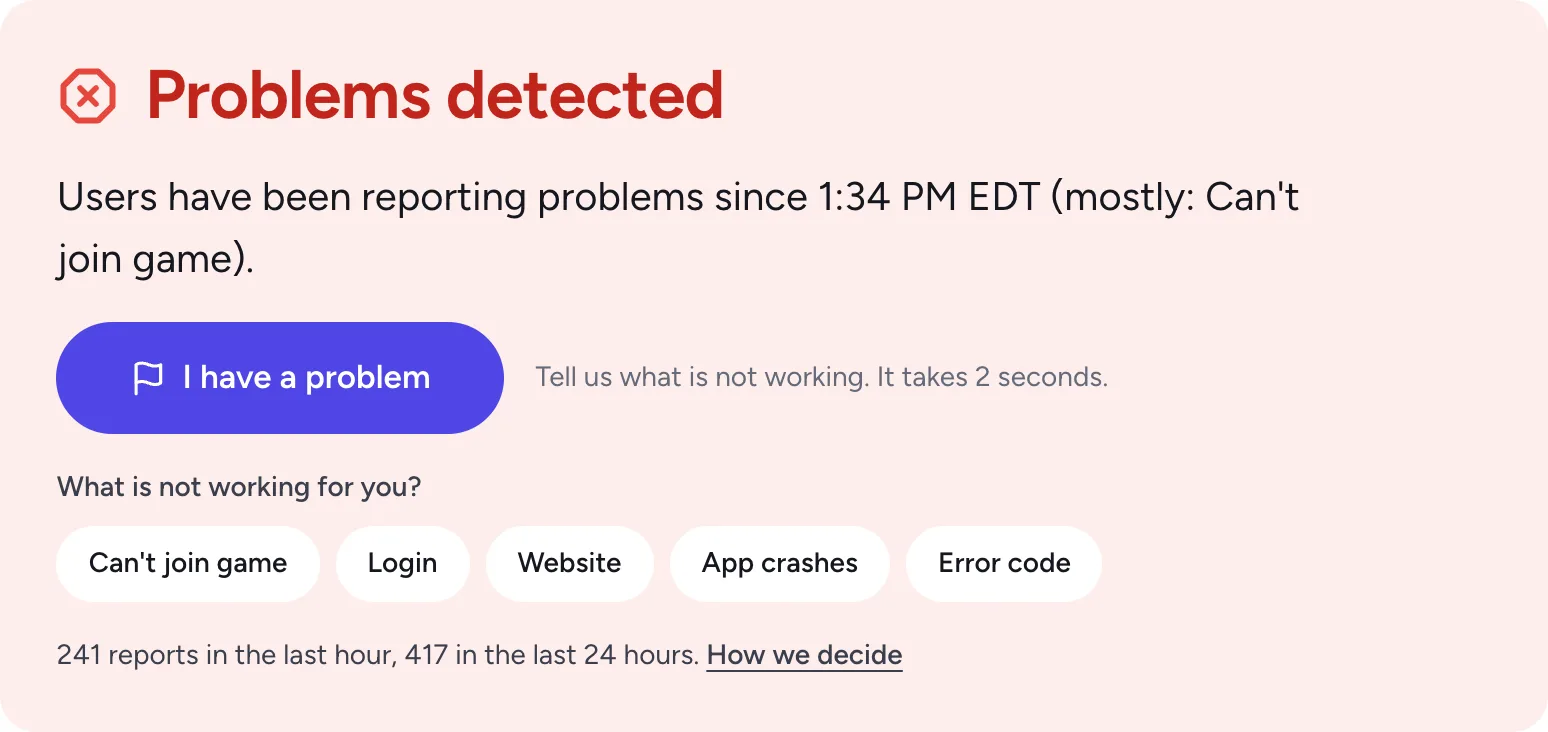
- Problems detectedAt least 10 reports in the last hour and at least twice the top of the usual range, or our check of the website failed twice in a row.
User reports
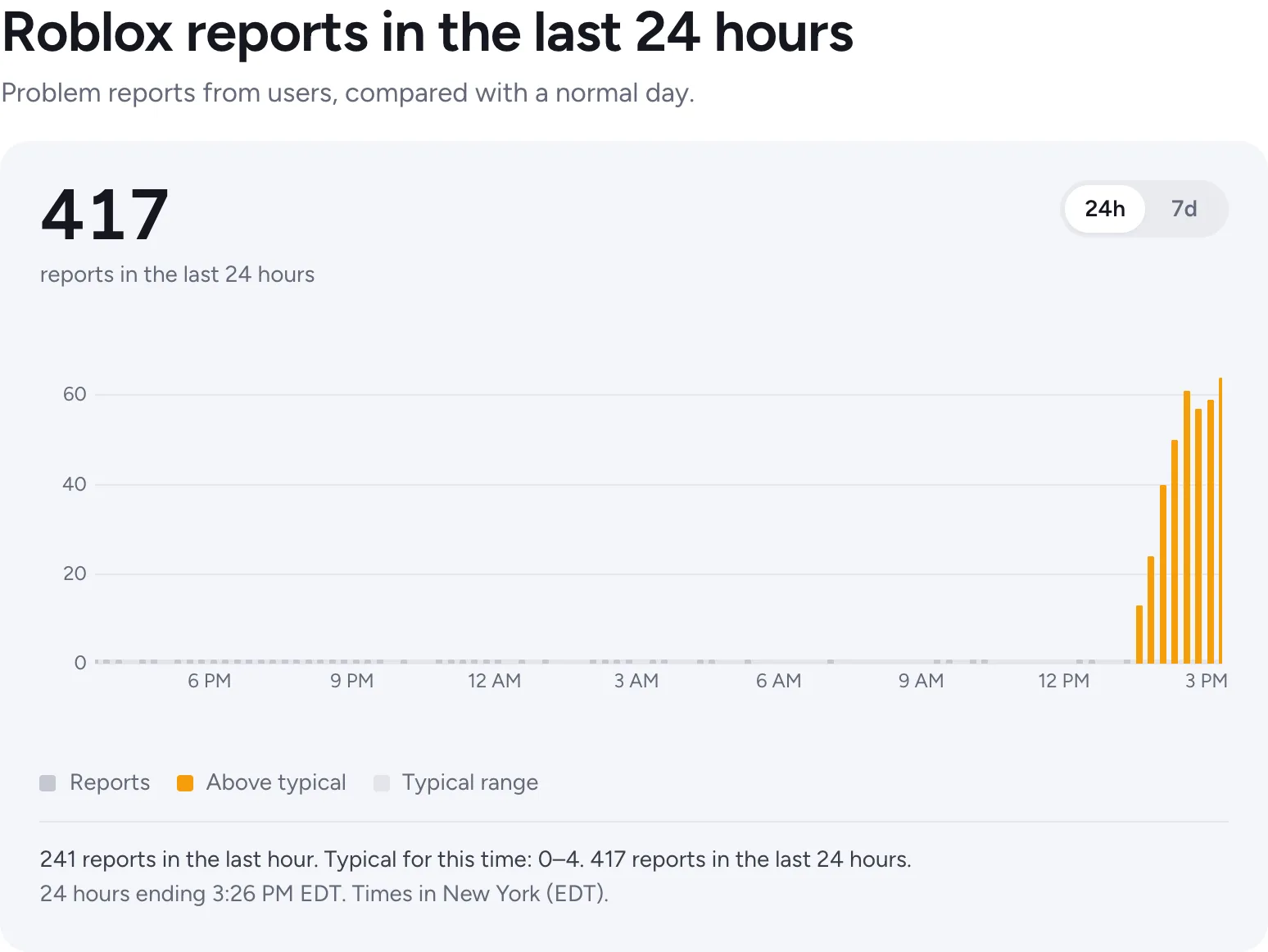
Anyone can press "I have a problem" and pick what is not working. We then compare the reports of the last hour with what is normal for that service at that hour of the day, based on the previous four weeks.
- A few reports on a quiet service do not count as an outage; a clear jump above the usual range does.
- Each visitor's report counts once per service every 30 minutes, so pressing the button again changes nothing.
- Reports from data centers, bots and automated traffic are dropped.
- Locations are worked out from the IP address and are approximate. Areas with very few reports are hidden on the map.
What people report
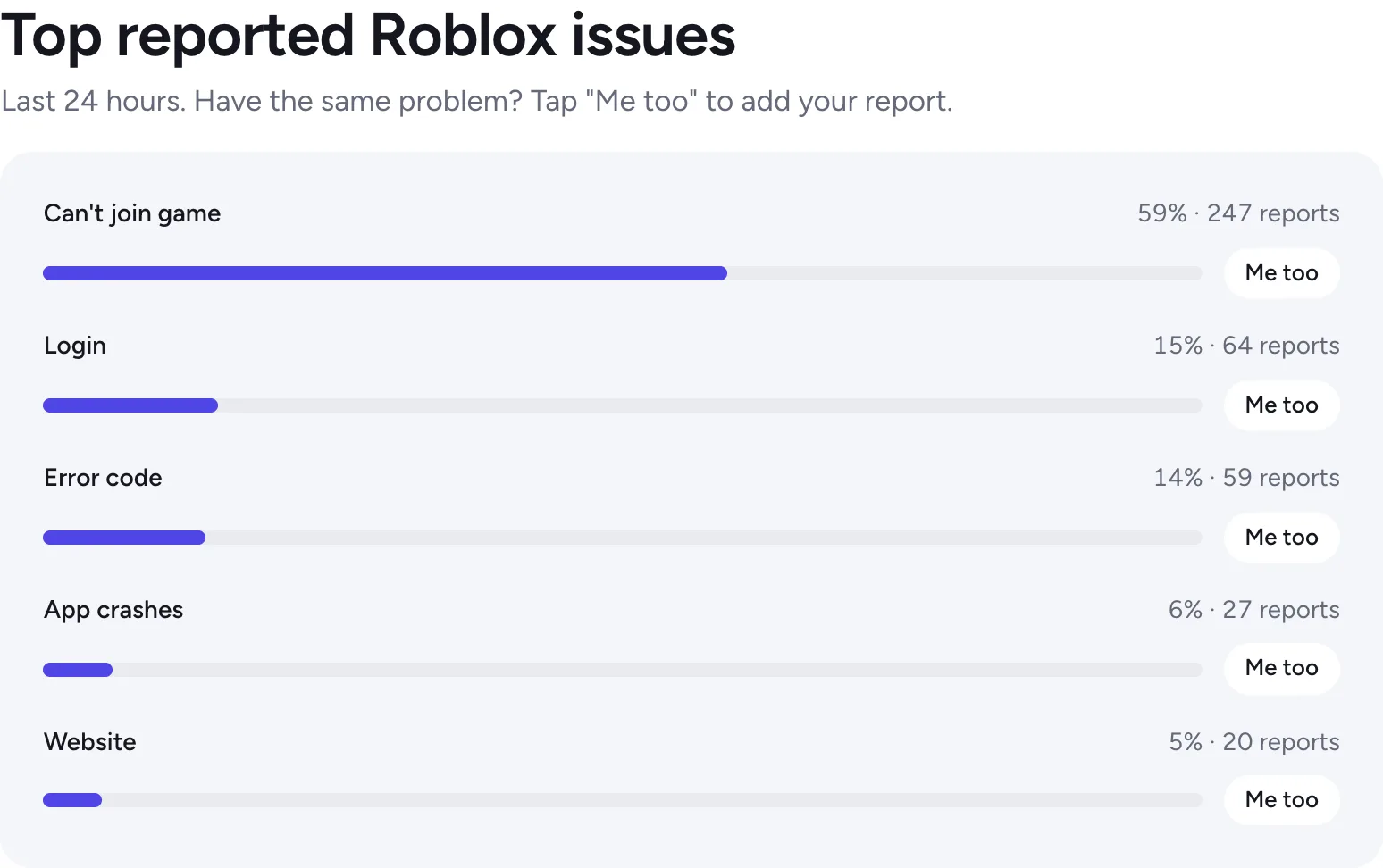
Each service has its own list of problems to pick from, such as login, payments or "can't join game". The lists are built from what visitors actually report and grouped by type of service, so the counts show not only that something is wrong but what.
Our own checks of websites
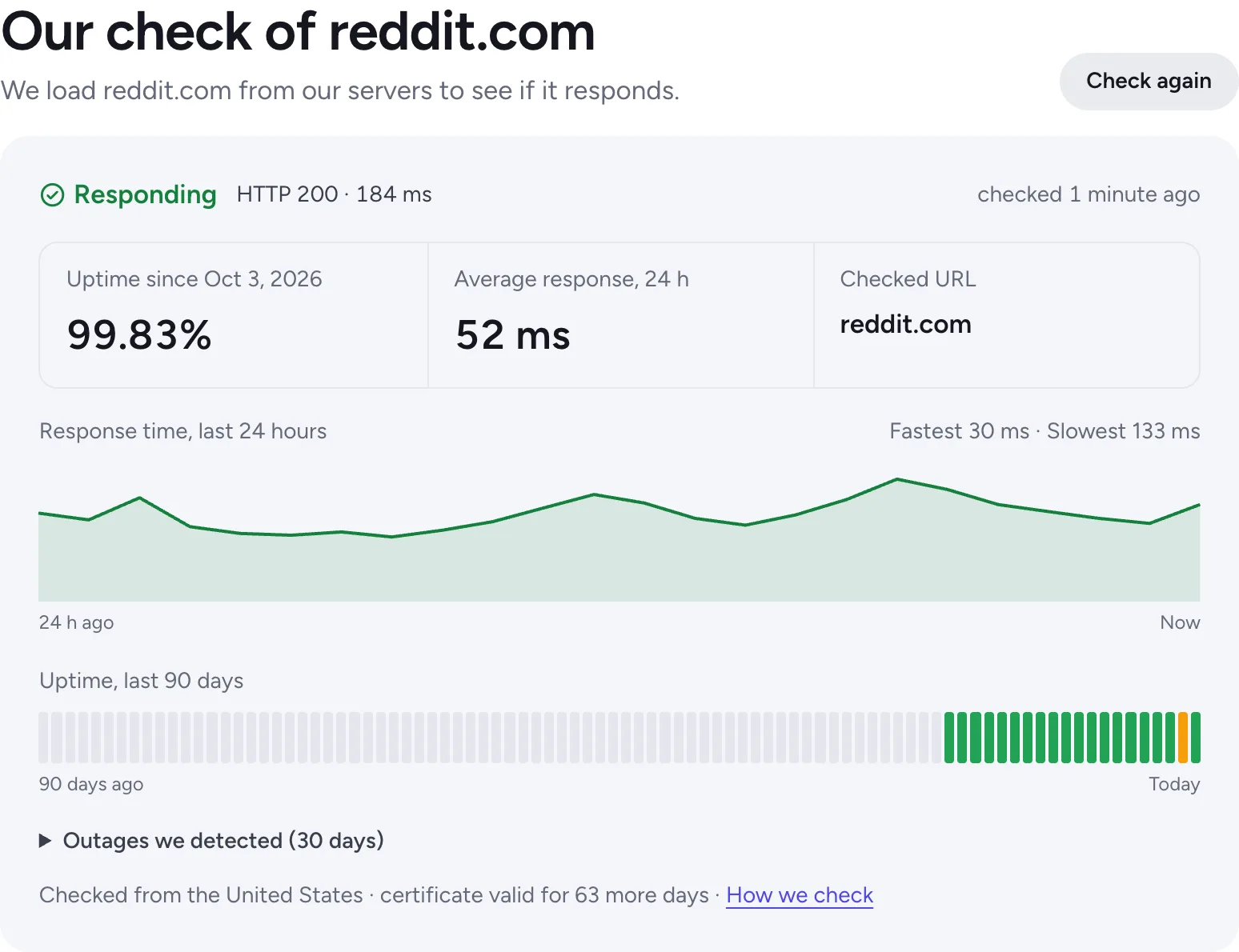
For websites, we also run automated checks from our servers. Popular websites are checked every 15 to 30 minutes, others every 2 hours, and any website people are reporting problems with is checked every 5 minutes.
- Each check confirms that the domain resolves, that the page loads with a valid response (and the expected content, where we look for it) and that the security certificate is valid.
- We only mark a site as down after two failed checks in a row.
- We pause decisions when our own connection has problems: we check a handful of very reliable sites every minute, and when several of them fail we ignore our results until they pass again.
- Some websites block automated checks. We say so on the page and rely on user reports. A working check never hides problems that many users report.
Limits of the data
- Reports come from people who visit this site, so they lean toward the countries and devices our visitors use.
- A problem that affects only one region, one network or one app version can be real and still stay below the threshold.
- Our checks run from one location, so a regional outage may not show in them.
- We are not connected to the services we list. For an official answer, check the service's own status page.
For website owners
Our checks identify themselves with the user agent isdownusBot/1.0 (+https://isdownus.com/methodology). Each check is a single page request, at most one at a time per site, and we slow down when a site answers "429 Too Many Requests". We never follow links, submit forms or log in.
To stop the checks or correct something about your service, contact us.